


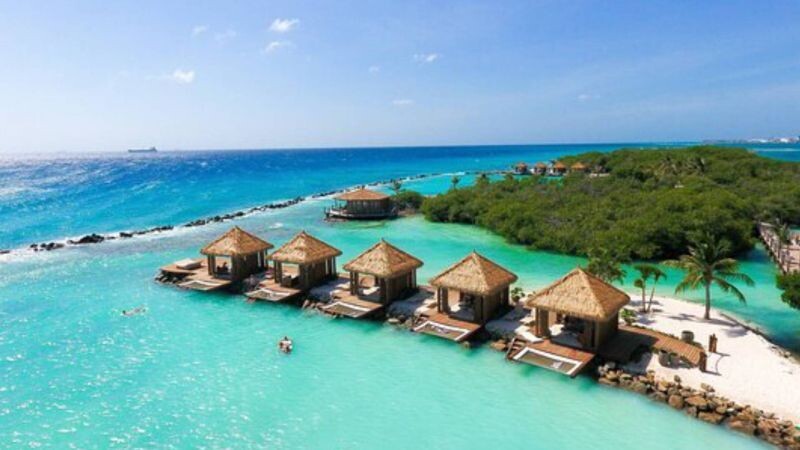
This place can be visited at any time of the year, it doesn't suffer from hurricanes, its beaches are free of sargassum, and it offers sunsets that seem like a ceremony: people stop to watch the sun disappear between sailboats and birds. Additionally, it is safe, the beaches are public, and there are now direct flights from Buenos Aires, Córdoba, and Mendoza. The flag carrier has added new frequencies, which has spiked interest. For many Argentines, it is a destination that combines the familiar with the exotic.
Clean beaches, turquoise sea, and short distances
Eagle Beach, Palm Beach, Arashi, and Tres Trapi are some of the most visited beaches. In Conchi, the natural pool, waves break against volcanic rocks and the water calms as if someone turned down the volume of the world.
Culture, language, and gastronomy: a mix that surprises
The local language is Papiamento, a fusion of Spanish, Portuguese, Dutch, English, and African languages. Eating like the locals is part of the experience. You can try dishes with fresh fish, tropical fruits, Caribbean spices, and European techniques. The sea is calm, without strong waves, and the temperature stays warm all year round. In Aruba, the wind blows constantly and the trees lean southeast. Under its shade, visitors find a way to disconnect.
Protected nature and urban art
More than 18% of the island is under environmental protection. According to official data, the country shows a 126% tourist growth, well above the regional average. Length of stays also doubled. At the airport, the welcome sign says "Bon bini", and everyone says it with a smile. Each beach has its style: from calm sands to areas ideal for snorkeling. Arikok National Park offers easy trails, giant cacti, iguanas, donkeys, and rock paintings over 900 years old.
Until July 2025, travel from Argentina grew by over 100% compared to the previous year. For Arubans, Papiamento is more than a language; it is a way of living in community. The gastronomy also reflects that mix. The most famous is the fofoti, which appears on postcards and serves as a local symbol.